
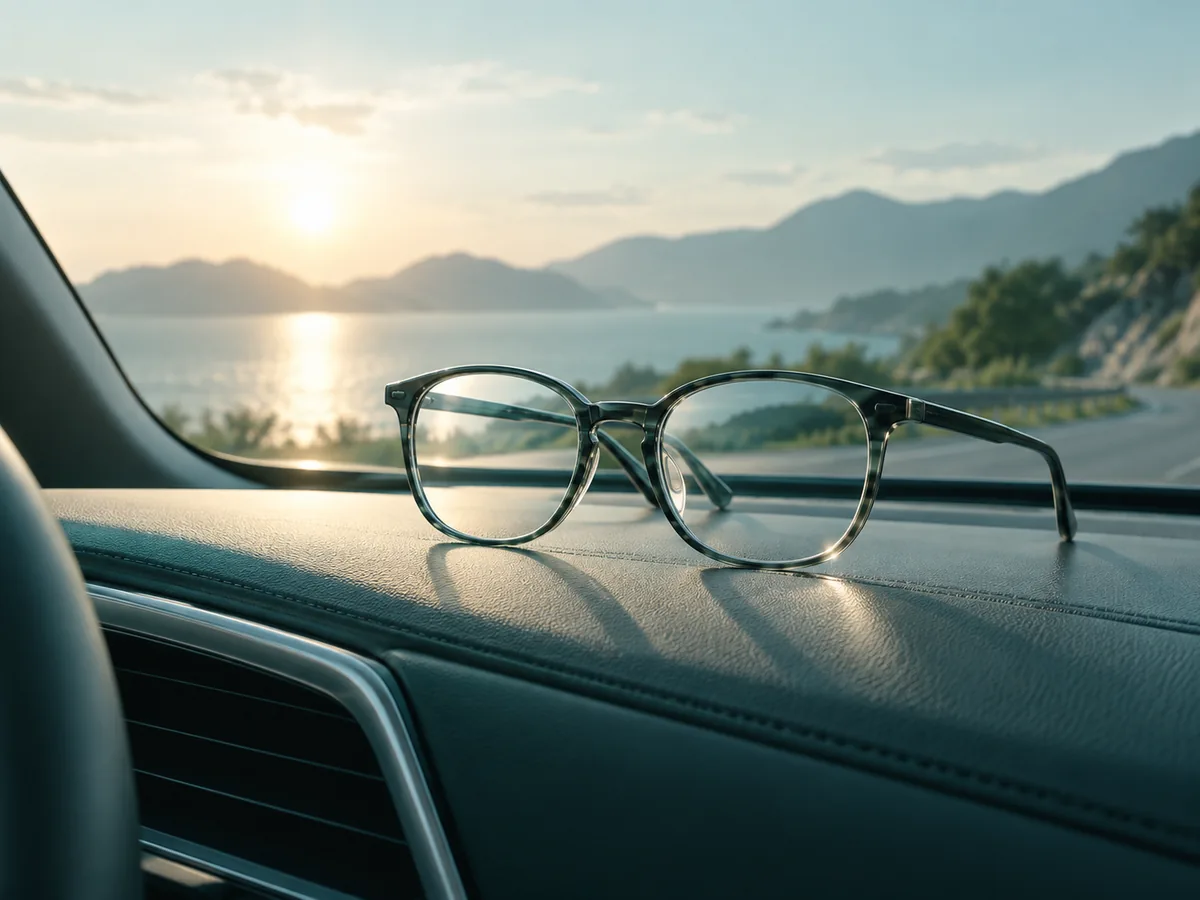
Many conventional UV-responsive photochromic lenses darken less behind a windshield because the glass limits the UV that activates them. Some specialized products are designed to respond differently, so the answer depends on the exact lens. For a driving-oriented range, request in-car performance evidence and intended-use information rather than assuming outdoor darkening predicts the result.
Key takeaways
- Outdoor activation does not prove equivalent activation inside a car.
- Identify the exact photochromic technology being quoted.
- Review suitability and transmission requirements for the intended market.
Why the windshield changes the exposure
Transitions explains that windshield filtering limits activation for conventional UV-responsive products. This is a useful explanation of the environment, not evidence that every photochromic product behaves identically.
Ask the supplier what activates the proposed lens and which documented performance applies behind glass. A familiar color, material index or generic photochromic name does not answer that question. Keep conventional and specialized options distinguishable in the quotation.
What should buyers ask for?
Collect evidence that describes the test environment as well as the result. An outdoor sample demonstration should remain an outdoor observation unless the claimed in-car condition was actually evaluated.
| Question | Useful response | Gap to resolve |
|---|---|---|
| Which exact product is offered? | Technology and product identifier | Generic 'photochromic' label only |
| What was the exposure environment? | Defined glazing, light and temperature conditions | Unlabeled dashboard photograph |
| What was measured? | Transmission or color at defined times | Subjective 'very dark' description |
| What use is supported? | Product instructions and applicable evidence | Unqualified driving or safety promise |
Design a relevant sample evaluation
If evaluating a proposed in-car option, agree the glazing setup, environmental conditions and sample preparation with the testing team. Record temperature and exposure timing so a later comparison can be interpreted. Keep the ordinary outdoor result beside, but separate from, the behind-glass result.
An illustrative purchasing decision might compare a conventional everyday option and a specialized in-car option as different product tiers. Do not describe the latter as an upgrade for every buyer without considering baseline tint, other optical properties, cost and the intended use.
- Request exact product identity and current documentation.
- Separate outdoor and behind-glass results.
- Review baseline as well as activated transmission.
- Approve customer-facing explanations before launch.
Keep driving claims within the evidence
Do not promise improved driving safety or universal suitability from a darkening demonstration alone. The finished product, wearer requirements and applicable transmission or use restrictions all need appropriate review.
Provide distributors with a plain explanation of what customers should expect from the selected product. If a customer reports that lenses remain relatively clear in a car, first identify the lens technology and conditions before treating the report as a manufacturing failure.
Buyer questions
Frequently asked questions
Will every photochromic lens stay completely clear in a car?
No. Behavior varies by technology and conditions. Request evidence for the exact product.
Does outdoor darkness predict in-car darkness?
Not reliably, because the exposure through glazing differs from direct outdoor exposure.
Can we market a lens as suitable for night driving?
Do not infer that from its photochromic label. Review the finished product's instructions, evidence and applicable requirements with the appropriate professional.
Further reading
These external references provide background context. Product availability and performance claims must still be confirmed for the exact item being purchased.