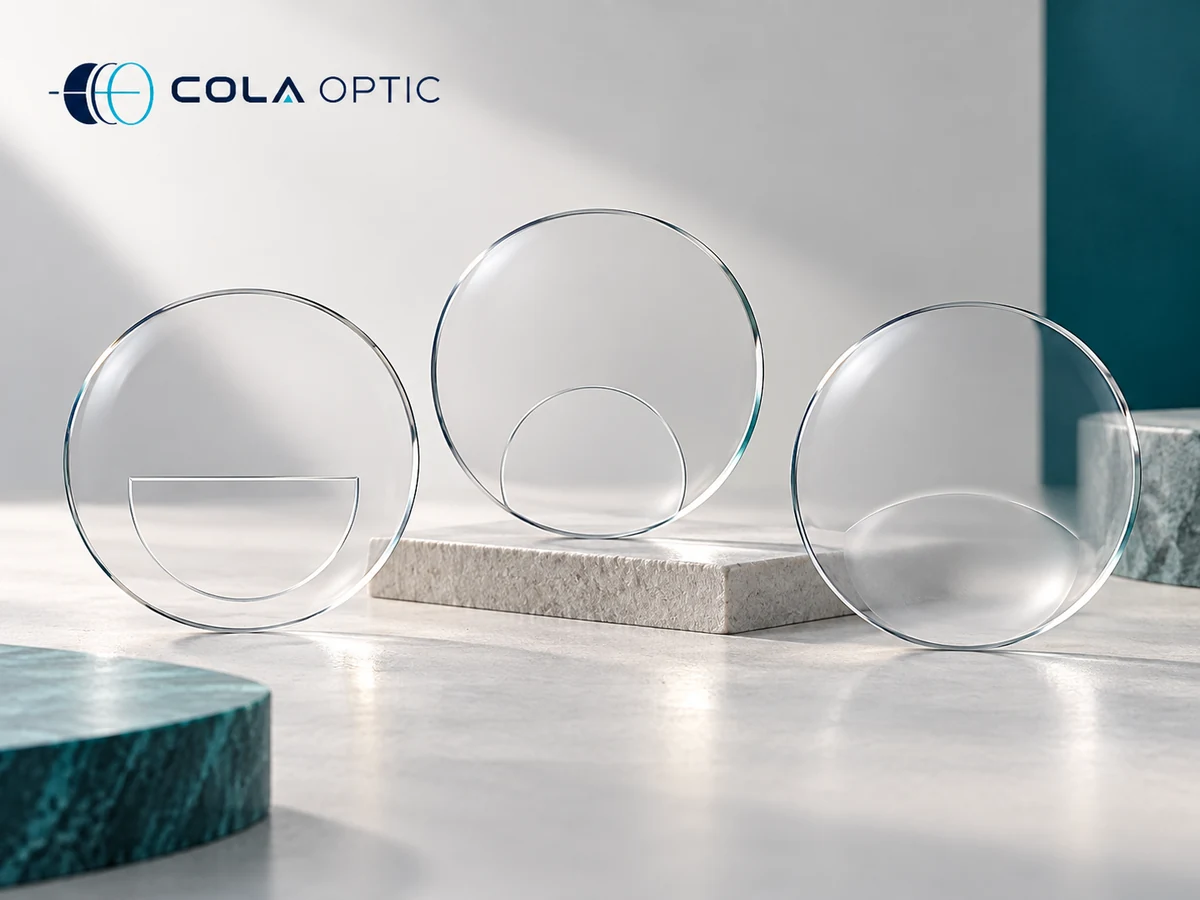
CR-39 and 1.56 bifocal programs with round-top, flat-top or blended near segments. Clear, blue-filter and photochromic options can be specified around the required addition and coating.
CR-39 / 1.56Round / flat / blended segmentsADD +1.00 to +3.00 D referenceClear / blue cut / photochromic
Sample-first cooperation · Typical first reply within 1 business day
Buyer fit
Built around a clear procurement decision.
For optical buyers sourcing conventional segmented distance-and-near lenses. Confirm segment shape, size, addition and fitting references separately; one sphere value does not define the complete bifocal product.
Start with representative samples, approve the agreed specification, then use it as the reference for trial and repeat orders.
Technical parameters
Typical supply configuration.
Final material, power matrix, coating, tolerances, tests, and availability are confirmed before quotation.
Updated
Bifocal Lenses specifications
Parameter
Configuration
Lens design
Bifocal
Index options
CR-39 / 1.56
Segment choices
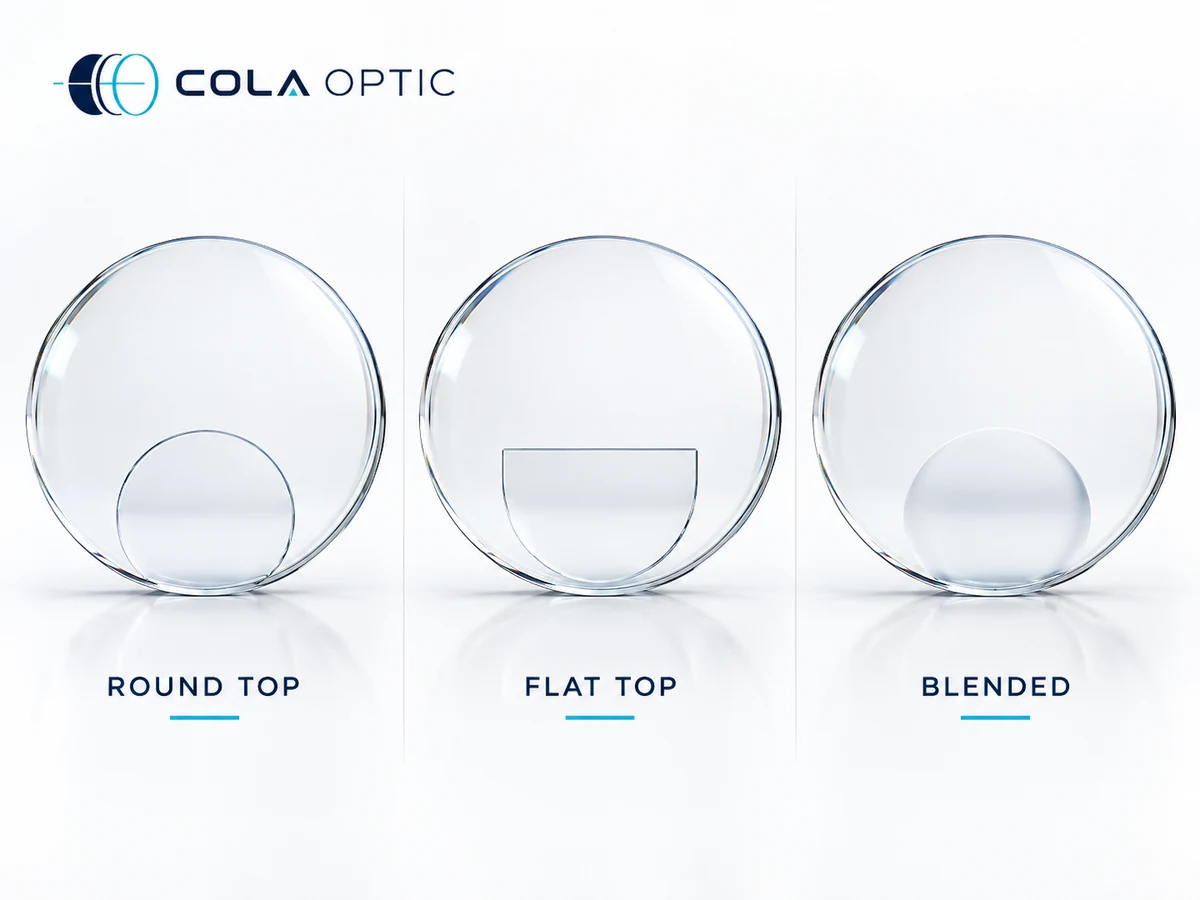
Round-top / flat-top / blended
Sphere reference
−2.00 to +3.00 D
Addition reference
+1.00 to +3.00 D
Function options
Clear / blue cut / photochromic
Coating
UC / HC / HMC / SHMC
Segment dimensions
Confirmed from the selected design drawing
Bifocal segment choices
Segment
Geometry
Order detail
Round-top
Circular near segment
Diameter and fitting reference
Flat-top
Near segment with a flat upper boundary
Segment width and position
Blended
Near segment with a blended transition in appearance
Exact design and checking instructions
Segment width, addition and fitting height are separate specifications. Suitability and fitting require qualified optical assessment.
Design schematic · Not to scale
Lens design
Choose the near-segment shape
The main area provides the distance correction and the lower segment carries near addition. Round-top, flat-top and blended designs differ in segment geometry and appearance. Approve a drawing and sample rather than ordering from an abbreviation alone.
Application illustration
Application & selection
Prepare the full job information
Include the required addition and segment measurements with the prescription. Have the laboratory check frame cutout and the manufacturer's fitting instructions. A substitute segment design needs review even when the prescription values match.
Commercial options
Specify the program your market needs.
Share your target range and packaging plan for a focused specification and quotation.
Prescription matrixSend sphere, cylinder, addition where applicable, diameter and quantities.Coating and colorIdentify the exact finish and approve representative paired samples.Private labelConfirm artwork, envelope labels, inner boxes and carton identification.Order approvalAvailability, minimum quantity, lead time and evidence are confirmed in the quotation.
Sample and quality route
Approve what matters before volume.
01
Match material, design and power to the approved order
Reviewed against the confirmed product and packing specification.
02
Inspect relevant optical and dimensional properties
Reviewed against the confirmed product and packing specification.
03
Compare paired appearance and surface condition
Reviewed against the confirmed product and packing specification.
04
Review specified performance reports and sample identity
Reviewed against the confirmed product and packing specification.
05
Reconcile product labels, batch references and packaging
Reviewed against the confirmed product and packing specification.
Procurement FAQ
Questions buyers ask before sampling.
Is a blended bifocal the same as a progressive lens?+
No. A blended bifocal retains a distinct near segment; a progressive design changes power gradually through a corridor.
Can all segments use every coating?+
Confirm the combination of material, segment, function and coating before ordering.
What does ADD describe?+
ADD is the additional near power. It must be recorded separately from distance sphere and segment dimensions.
Start with a useful inquiry
Send your power range, coating, quantity, and destination market.
We will help narrow the specification, sample scope, packaging route, and commercial terms.