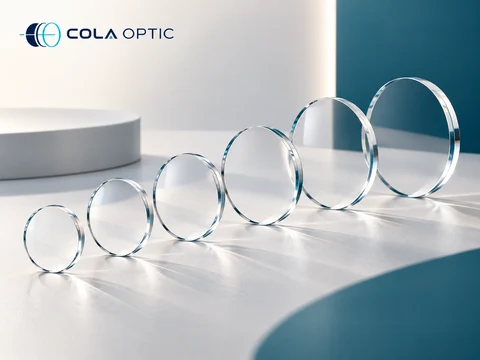
Polycarbonate lens inquiries covering single vision, bifocal and progressive designs, with clear, blue-filter and photochromic options. Match the hard coat and processing instructions to the selected PC variant.
1.591 PC referenceSingle vision / bifocal / progressiveClear, blue cut and photochromicHard coat and AR options
MaterialPolycarbonate (PC)
Refractive-index reference1.591
Typical material referencesDensity approximately 1.20 g/cm³; Abbe approximately 31
Sample-first cooperation · Typical first reply within 1 business day
Buyer fit
Built around a clear procurement decision.
For optical buyers building lightweight PC assortments with consistent material, coating and edging requirements. Review finished-lens evidence separately when the intended application requires impact or protective-eyewear compliance.
Start with representative samples, approve the agreed specification, then use it as the reference for trial and repeat orders.
Technical parameters
Typical supply configuration.
Final material, power matrix, coating, tolerances, tests, and availability are confirmed before quotation.
Updated
Polycarbonate Lenses specifications
Parameter
Configuration
Material
Polycarbonate (PC)
Refractive-index reference
1.591
Typical material references
Density approximately 1.20 g/cm³; Abbe approximately 31
Designs
Single vision / flat-top / blended / progressive
Function variants
Clear / blue cut / photochromic / blue-cut photochromic
PC-specific edging, drilling and cleaning instructions
PC design and finish options
Design family
Supply inquiry
Selection requirement
Single vision
Clear and functional variants
Sphere / cylinder / diameter
Bifocal
Flat-top / blended
Segment geometry and addition
Progressive
Finished / semi-finished inquiry
Design, corridor and fitting instructions
Coating
Hard coat / AR / easy-clean finish
Material compatibility and processing guidance
Typical material values are orientation references, not batch test results. PC material alone does not certify finished protective eyewear.
Design schematic · Not to scale
Lens design
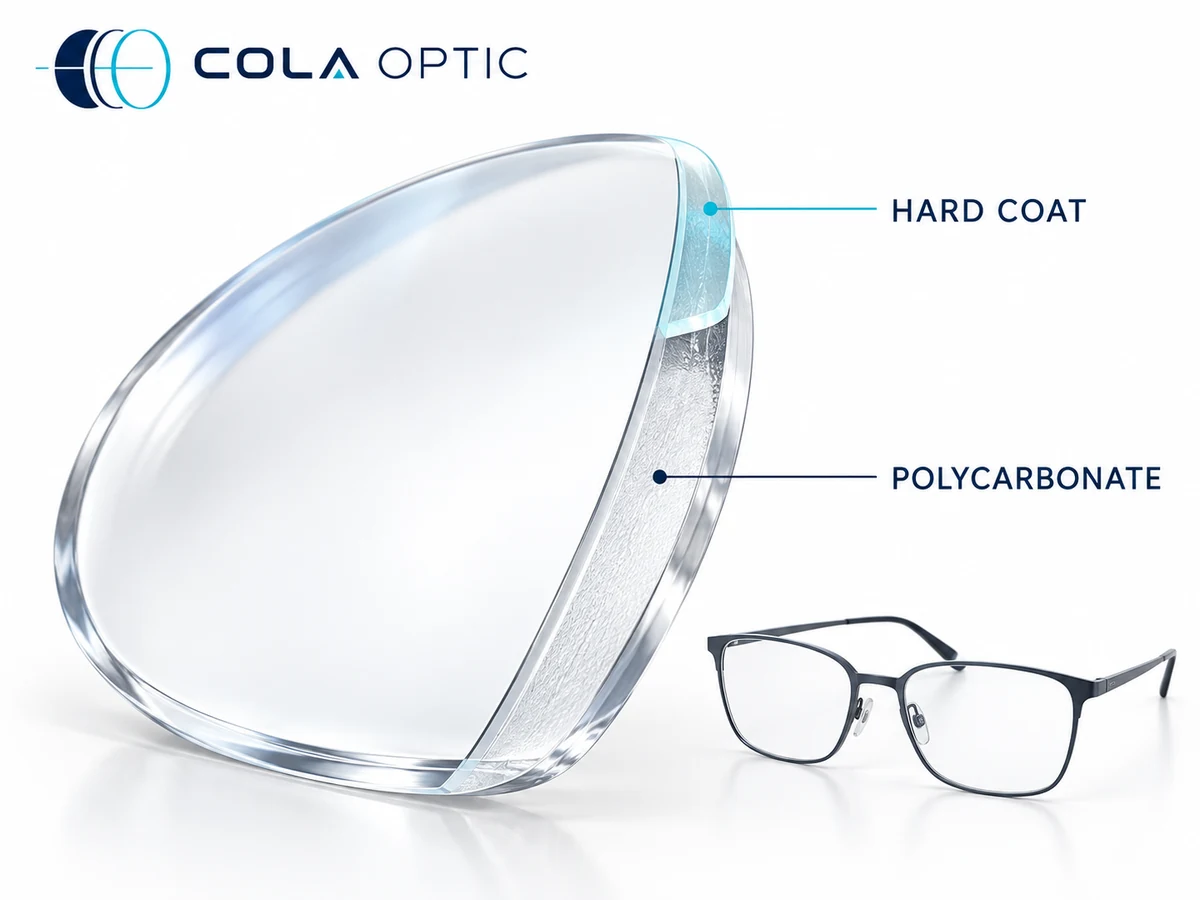
Pair the PC substrate with a suitable hard coat
The material and coating should be specified together. This layer illustration explains the hard-coated PC concept without promising an impact rating for the lens or the completed frame assembly.
Application illustration
Application & selection
Plan the processing and frame assembly
Confirm edging settings, mounting restrictions and cleaning compatibility for the selected product. Where an impact-related use is required, review the relevant finished-product test scope and frame assembly rather than relying on material naming.
Commercial options
Specify the program your market needs.
Share your target range and packaging plan for a focused specification and quotation.
Prescription matrixSend sphere, cylinder, addition where applicable, diameter and quantities.Coating and colorIdentify the exact finish and approve representative paired samples.Private labelConfirm artwork, envelope labels, inner boxes and carton identification.Order approvalAvailability, minimum quantity, lead time and evidence are confirmed in the quotation.
Sample and quality route
Approve what matters before volume.
01
Match material, design and power to the approved order
Reviewed against the confirmed product and packing specification.
02
Inspect relevant optical and dimensional properties
Reviewed against the confirmed product and packing specification.
03
Compare paired appearance and surface condition
Reviewed against the confirmed product and packing specification.
04
Review specified performance reports and sample identity
Reviewed against the confirmed product and packing specification.
05
Reconcile product labels, batch references and packaging
Reviewed against the confirmed product and packing specification.
Procurement FAQ
Questions buyers ask before sampling.
Are PC lenses unbreakable?+
No. Impact behavior depends on the finished product and conditions; no lens is represented here as unbreakable.
Is every PC variant photochromic?+
No. Clear, blue-filter and photochromic programs are distinct variants.
Can the same processing settings be used for every resin?+
Follow the product-specific laboratory instructions rather than assuming compatibility across materials.
Start with a useful inquiry
Send your power range, coating, quantity, and destination market.
We will help narrow the specification, sample scope, packaging route, and commercial terms.