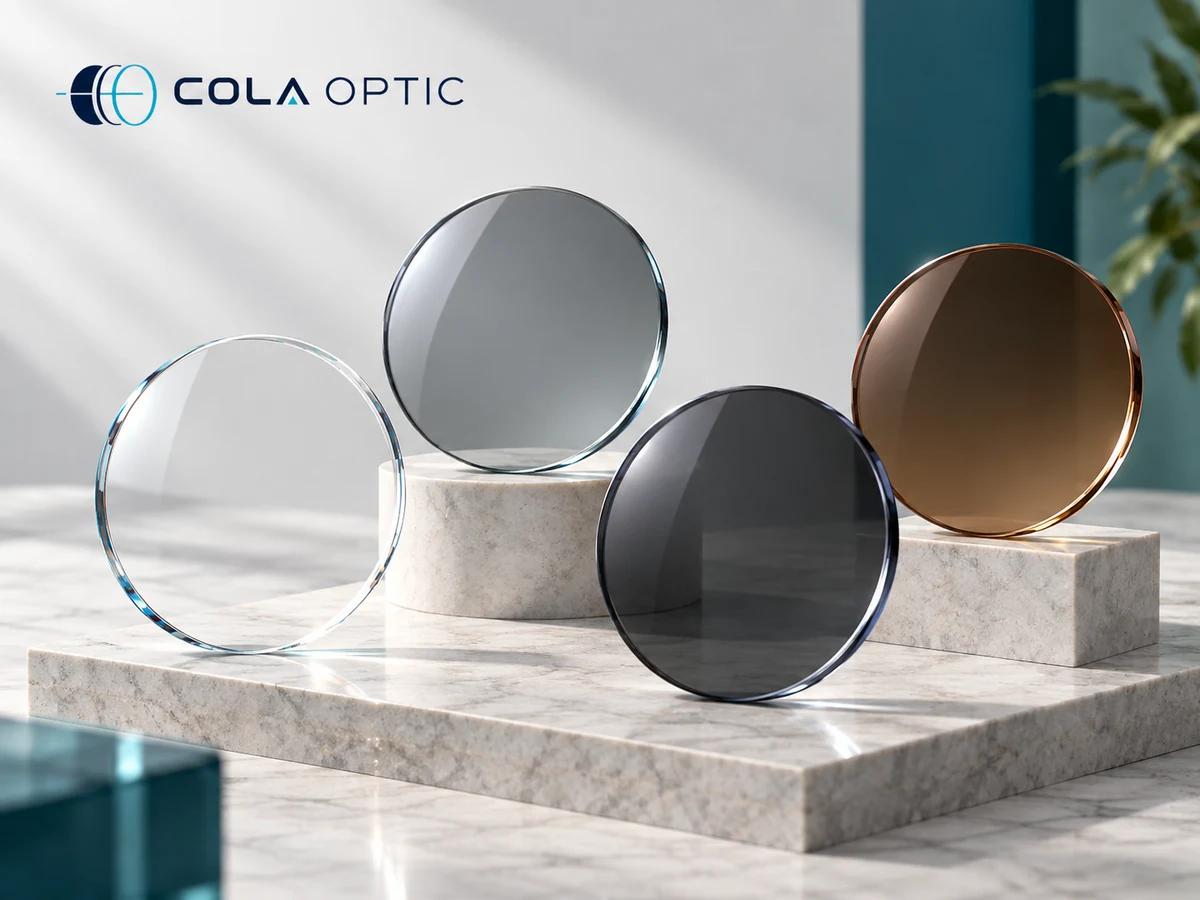
Material-based photochromic options covering single vision, bifocal and progressive designs. Choose clear-base or blue-filter configurations and approve the desired activated color under defined conditions.
Single vision / bifocal / progressiveClear-base and blue-filter optionsGrey, brown and color inquiriesMaterial-based photochromic route
Photochromic routePhotochromic components incorporated in the lens material
Sample-first cooperation · Typical first reply within 1 business day
Buyer fit
Built around a clear procurement decision.
For buyers assembling indoor-to-outdoor prescription collections. Confirm the lens family and preparation method, then compare baseline appearance, activation and fading using the same exposure and temperature conditions.
Start with representative samples, approve the agreed specification, then use it as the reference for trial and repeat orders.
Technical parameters
Typical supply configuration.
Final material, power matrix, coating, tolerances, tests, and availability are confirmed before quotation.
Updated
Material Photochromic Lenses specifications
Parameter
Configuration
Photochromic route
Photochromic components incorporated in the lens material
Design choices
Single vision / round-top / flat-top / blended / progressive
Standard inquiry index
1.56; other material requirements reviewed separately
Function options
Clear base / blue cut / faster-change program inquiry
UV specification
UV400 / UV420 options subject to product evidence
Color options
Grey, brown, pink, blue, orange, purple, yellow, green
Coating
Confirmed for the material and photochromic program
Activation and fading
Compared under an agreed method, temperature and exposure
Photochromic program choices
Program
Selection focus
Approval requirement
Clear base
Indoor appearance and activated color
Baseline, activation and fading samples
Blue cut
Combined photochromic and spectral specification
Transmission and activation evidence
Faster-change inquiry
Defined activation and recovery endpoints
Product-specific timed test under agreed conditions
Color illustrations are indicative. No universal activation time or in-car performance is assumed.
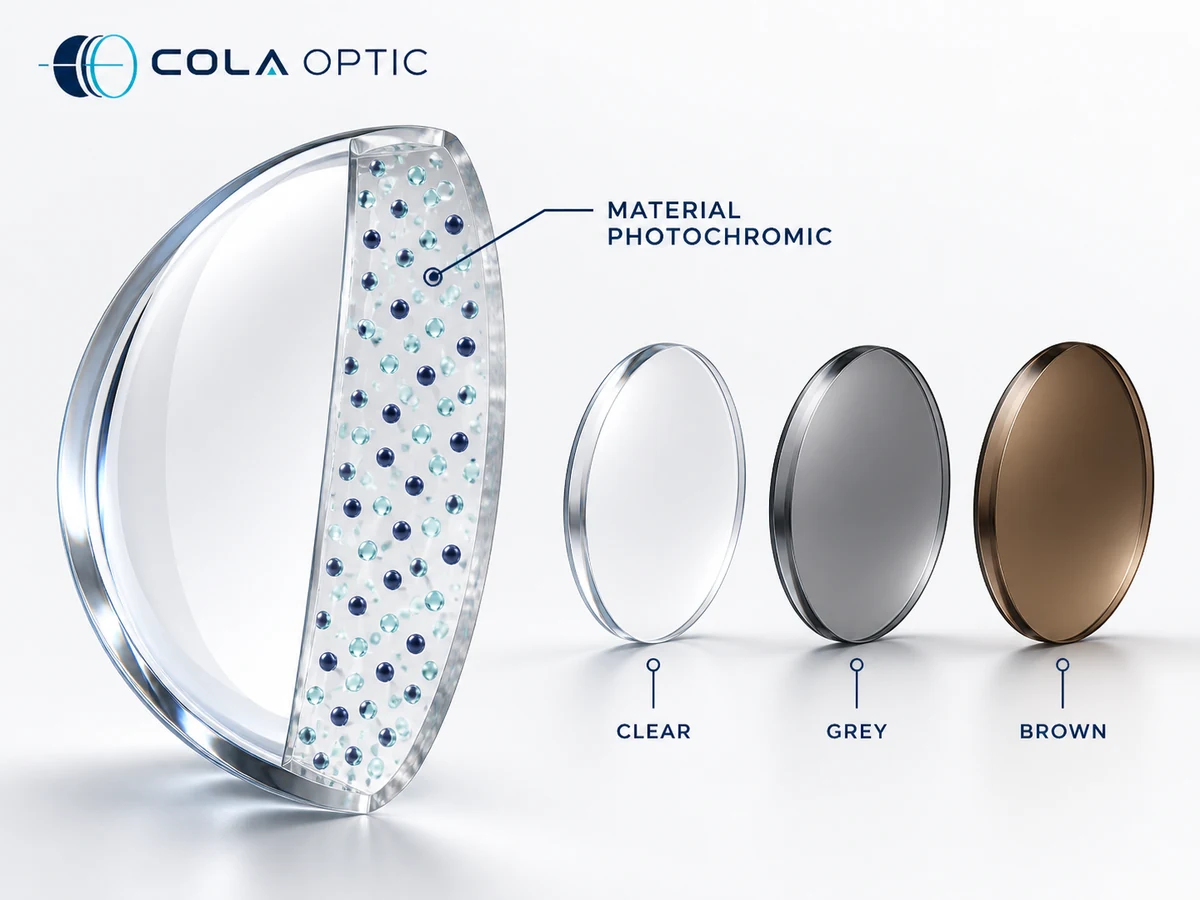
Design schematic · Not to scale
Lens design
Understand the material-based route
Photochromic components are incorporated into the material rather than represented only by a separate surface layer. The illustration explains the concept without assigning a chemical formulation or activation time to the supplied product.
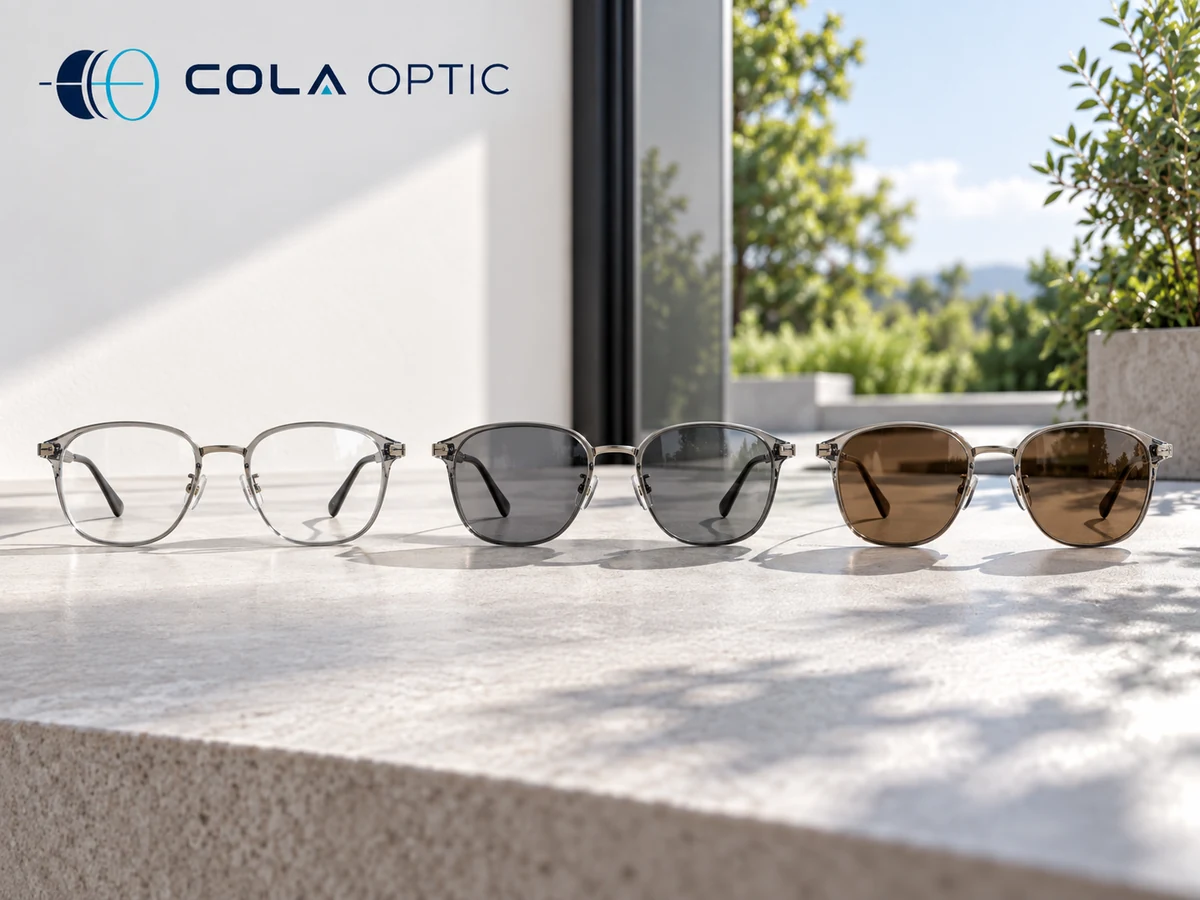
Application illustration
Application & selection
Approve clear and activated samples
Evaluate baseline tint, activated color, pair matching and recovery under a documented setup. If ordering a new color or optical design, check that the approval evidence covers that variant rather than extending one sample result to the whole range.
Commercial options
Specify the program your market needs.
Share your target range and packaging plan for a focused specification and quotation.
Prescription matrixSend sphere, cylinder, addition where applicable, diameter and quantities.Coating and colorIdentify the exact finish and approve representative paired samples.Private labelConfirm artwork, envelope labels, inner boxes and carton identification.Order approvalAvailability, minimum quantity, lead time and evidence are confirmed in the quotation.
Sample and quality route
Approve what matters before volume.
01
Match material, design and power to the approved order
Reviewed against the confirmed product and packing specification.
02
Inspect relevant optical and dimensional properties
Reviewed against the confirmed product and packing specification.
03
Compare paired appearance and surface condition
Reviewed against the confirmed product and packing specification.
04
Review specified performance reports and sample identity
Reviewed against the confirmed product and packing specification.
05
Reconcile product labels, batch references and packaging
Reviewed against the confirmed product and packing specification.
Procurement FAQ
Questions buyers ask before sampling.
Do material photochromic lenses always darken in a car?+
No. Response depends on the exact technology and exposure through the vehicle glazing; request specific evidence for in-car claims.
Are all eight colors available for every design?+
Confirm color, material, design and quantity together. The list identifies inquiry options, not guaranteed stock for every combination.
How should change speed be compared?+
Use the same conditioning, exposure, temperature, measurement endpoint and timing procedure.
Start with a useful inquiry
Send your power range, coating, quantity, and destination market.
We will help narrow the specification, sample scope, packaging route, and commercial terms.