
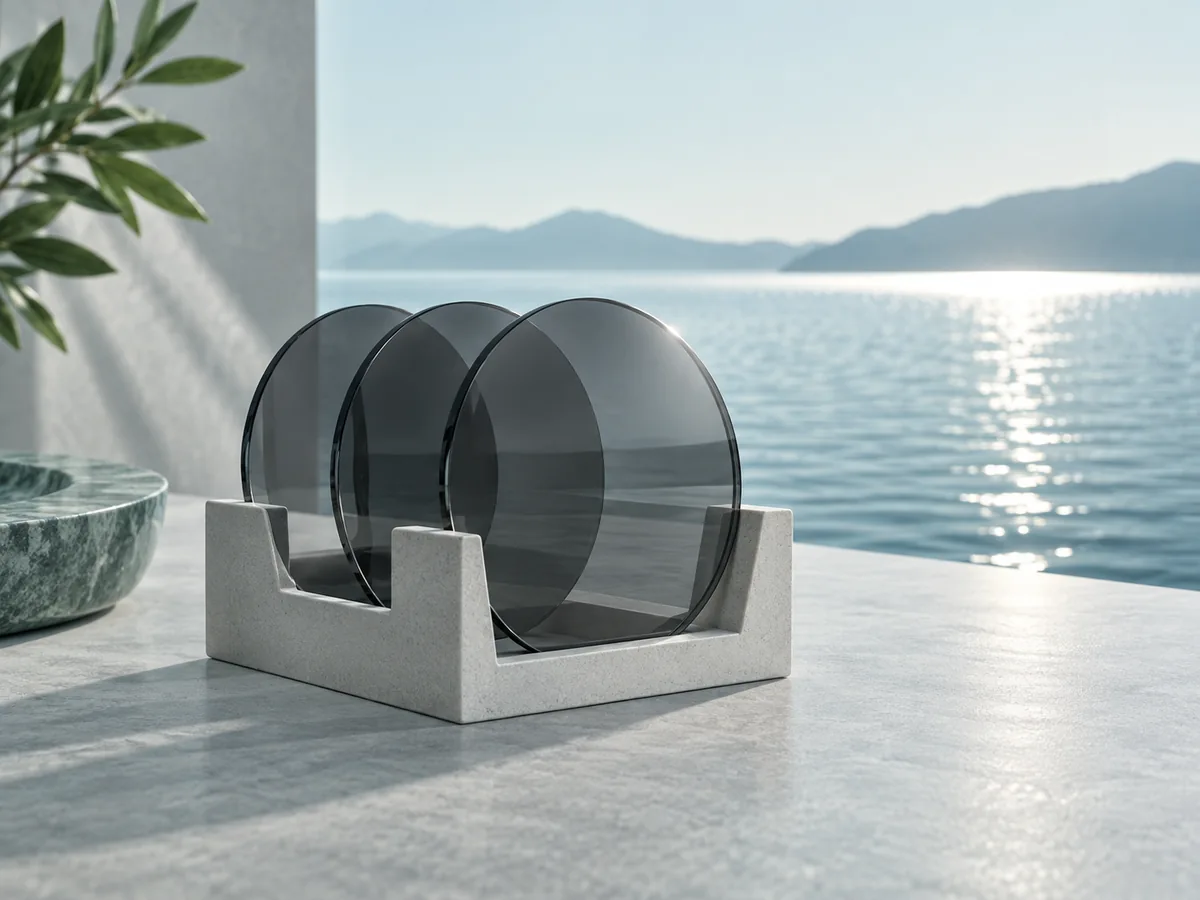
Tint and polarization describe different lens features. Tint affects the light transmitted and the visible color; polarization selectively filters light by orientation and can reduce reflected glare. Neither a dark appearance nor a polarization label should replace product-specific UV evidence. Specify each requirement separately when comparing sun-lens quotations.
Key takeaways
- A tinted lens is not necessarily polarized.
- UV performance must be specified independently of color and darkness.
- Confirm polarization axis requirements for the intended supply stage.
What problem does each feature address?
The American Optometric Association discusses polarization for reflected glare and treats UV protection as a separate selection consideration. For a purchasing team, this means a color sample cannot answer every performance question.
Define the intended use and the supply route before selecting a program. A plano uncut sun lens, an RX sun lens and a finished frame assembly need different order details. Confirm suitability claims for the actual finished product and destination rather than transferring them from a generic category name.
Reference: American Optometric Association: Sunwear considerations
Compare the order requirements
Use one comparison sheet for the complete sun-lens specification. A lower unit price is not a like-for-like comparison if one quotation omits polarization, coating or the requested evidence.
| Requirement | Tinted option | Polarized option |
|---|---|---|
| Color and transmission | Approve color and stated transmission criteria | Approve the same, alongside polarization requirements |
| Glare-control feature | Do not assume polarization | Specify applicable performance and axis criteria |
| UV evidence | Request independently | Request independently |
| Processing | Confirm material, base curve and coating compatibility | Also confirm orientation and processing instructions |
Approve a sample set before scaling the range
Request samples representing the colors and constructions actually proposed for sale. Review transmitted appearance, pair matching and the relevant test documents. If the product will be edged or mounted, have the receiving laboratory approve orientation and handling requirements.
For example, a grey tinted lens and a grey polarized lens may look similar in a catalog image. Mark them as separate SKUs and keep their sample records separate. An appearance match does not justify substituting one for the other in a customer order.
- Separate color, polarization and UV fields.
- Identify solid versus gradient tint.
- Confirm diameter and frame compatibility.
- Retain approved samples for repeat-order comparison.
Check intended-use statements
Do not describe every dark lens as suitable for driving or every polarized product as suitable for every display environment. Such suitability depends on the finished specification, applicable requirements and use conditions. Ask for the relevant product information and have claims reviewed for the intended market.
Sales content should explain the available features clearly and help a buyer request the correct evidence. It should not imply that a fashionable color or a simple demonstration proves the complete product's safety or compliance.
Buyer questions
Frequently asked questions
Are all tinted lenses polarized?
No. Polarization is a separate feature that must be explicitly specified.
Does a darker lens provide more UV protection?
Darkness alone does not establish UV performance. Review the appropriate product evidence.
Can polarized and non-polarized lenses share one item code?
Use distinguishable SKUs and labels so purchasing, warehouse and sales staff cannot confuse the two constructions.
Further reading
These external references provide background context. Product availability and performance claims must still be confirmed for the exact item being purchased.