
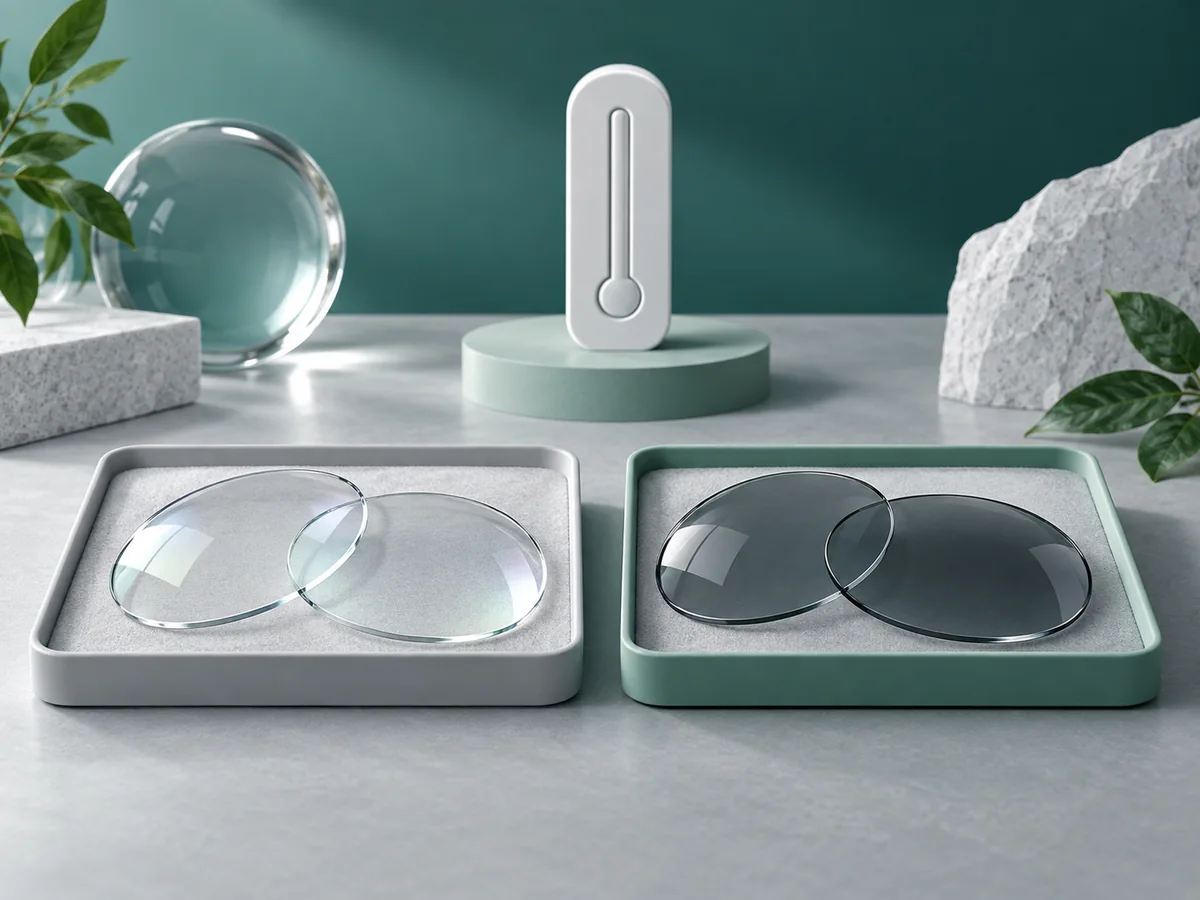
Photochromic samples should be compared under the same temperature, exposure, starting condition and measurement procedure. A quick outdoor demonstration can show a visible change, but it cannot establish a fair supplier ranking if conditions differ. Define the test first, record the conditions and compare both activation and fading against the agreed criteria.
Key takeaways
- Record temperature and exposure conditions for every comparison.
- Separate activated darkness, activation time and fade-back behavior.
- Use evidence for the exact material and photochromic product.
Why outdoor demonstrations can disagree
Transitions identifies temperature, available UV and material among factors affecting photochromic behavior. Its product information provides useful background, but proprietary performance claims should not be transferred to another manufacturer's lenses.
Two samples photographed at different times of day may receive different exposure. They may also start from different states if one was previously activated. Define preparation and conditioning with the testing laboratory before interpreting a difference as a product defect.
Build a comparison protocol
Let a qualified testing team select the method and equipment appropriate to the intended claim. The following records help procurement keep otherwise similar sample demonstrations comparable.
| Stage | What to record | What to compare |
|---|---|---|
| Preparation | Sample identity, conditioning and starting state | Comparable baseline |
| Activation | Temperature, exposure source, duration and measurement timing | Transmission or color at defined points |
| Fading | Post-exposure environment and measurement schedule | Recovery toward the defined baseline |
| Repeat run | Same setup and any deviations | Repeatability under the chosen conditions |
Use your destination conditions to choose test cases
A distributor serving a hot climate may reasonably ask for a comparison at a relevant elevated temperature as well as a controlled reference condition. That is a proposed test plan, not a claim that one universal temperature represents the entire market.
Choose the test cases before viewing results and keep each case separate in the report. Record the actual conditions rather than writing only 'summer test.' If the samples differ in material, treatment or color, make those differences visible beside the results.
- Approve the exposure and temperature settings in writing.
- Identify samples and batches before testing.
- Use objective measurements for numerical claims.
- Label photographs with the conditions they actually represent.
Approve a product-specific statement
A statement about activation time needs a defined endpoint and test conditions. 'Changes in seconds' is not a complete acceptance criterion. Likewise, a fading comparison should explain how recovery was measured and when timing began.
Keep the accepted protocol and retained samples with the purchase specification. For later batches, investigate deviations using the same method. Change the approved wording when the product or evidence changes instead of carrying old claims into a new lens program.
Buyer questions
Frequently asked questions
Can phone photos establish which lens changes faster?
Only as limited visual observations. A numerical speed claim requires an agreed endpoint, timing and controlled conditions.
Should activation and fading use one score?
Keep them separate because they describe different behavior and may matter differently to buyers.
Can we reuse another brand's published performance figures?
No. Obtain evidence for the exact product being sold, with its own conditions and method.
Further reading
These external references provide background context. Product availability and performance claims must still be confirmed for the exact item being purchased.