
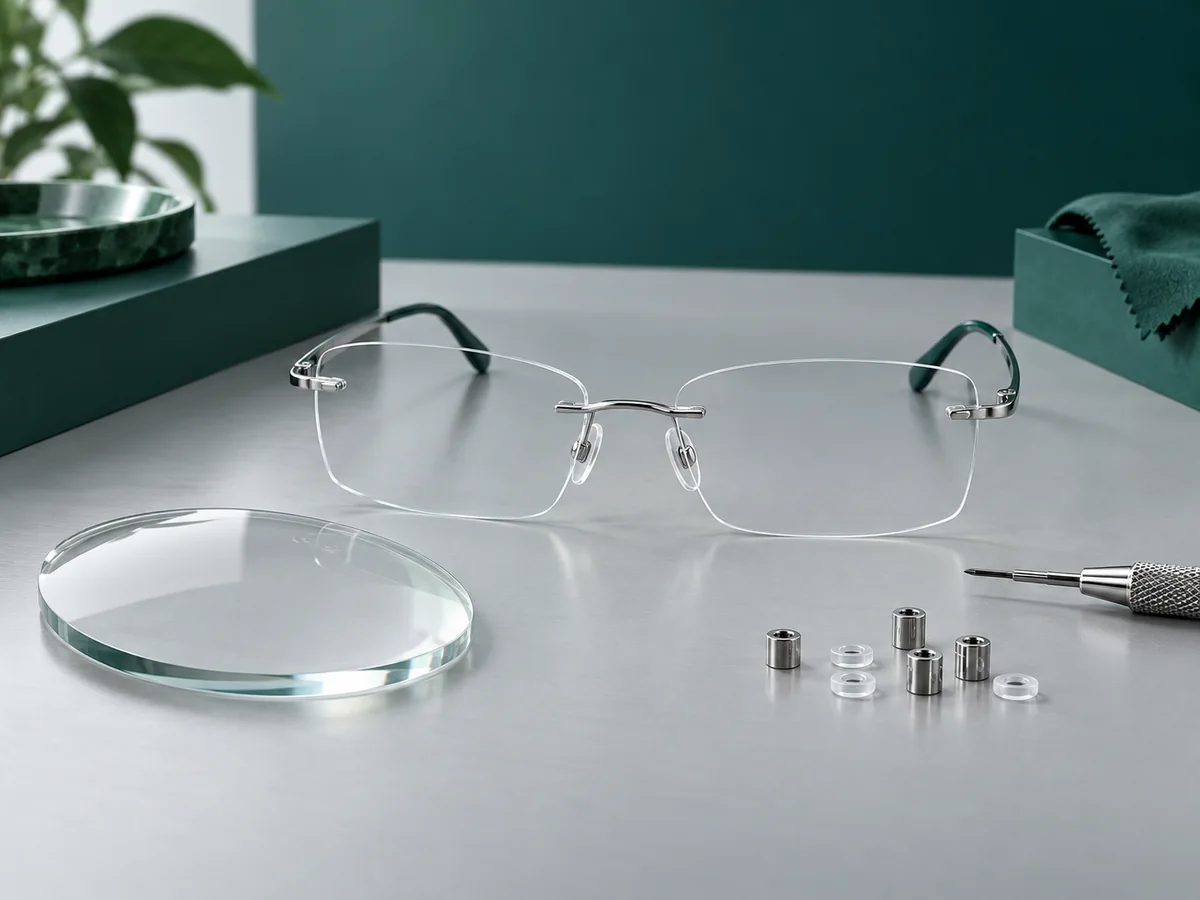
Select lenses for rimless eyewear using product-specific material guidance, frame hardware requirements and the receiving laboratory's validated process. Refractive index alone does not establish drilling or mounting suitability. Have the laboratory approve the complete combination before using it as a repeatable wholesale program.
Key takeaways
- Confirm the exact material and coating, not only the index label.
- Use the frame manufacturer's mounting instructions and hardware.
- Approve the finished assembly through the laboratory's process.
Why material identity matters
Mitsui's MR information includes material-specific processing characteristics. Those statements apply to the identified materials and should not be generalized to every lens with a similar index.
Ask the supplier for written suitability and handling information for the actual lens. Procurement should collect the evidence and coordinate a laboratory review rather than prescribing drilling dimensions or mounting forces from a generic online guide.
Reference: Mitsui Chemicals: MR lens materials
Prepare a complete technical request
The lens and frame specifications need to be reviewed together. Missing hardware information can prevent approval even when the optical material is clearly identified.
| Input | What to provide | Responsible review |
|---|---|---|
| Lens | Exact material, coating, design and job specification | Lens supplier and laboratory |
| Frame | Model, trace, hardware and mounting instructions | Frame supplier and laboratory |
| Process | Validated equipment and handling route | Laboratory process owner |
| Acceptance | Finished optical, dimensional and assembly checks | Agreed technical quality procedure |
Approve the combination with a controlled trial
Have the laboratory choose representative jobs and follow the relevant manufacturer's instructions. Record lens batch, frame revision and process references. Evaluate the finished assembly using the agreed quality procedure rather than accepting it simply because mounting was possible.
An illustrative change is replacing the original frame hardware with a different bushing system. Even if the lens SKU stays the same, ask the laboratory whether the change affects its approval. Treat frame and lens changes as potential triggers for reassessment.
- Keep trial samples identifiable.
- Use approved tools and procedures operated by qualified staff.
- Record assembly and inspection results.
- Define who can approve future substitutions.
Carry the approval into purchasing and support
Put the approved lens-and-frame combination in the commercial specification, including any exclusions. Warehouse labels should let staff distinguish the approved material from visually similar alternatives. Do not ship a different resin under a generic high-index description.
If cracking, looseness or other damage is reported, collect the job and assembly records and refer the item for professional inspection. A marketing statement about material toughness does not replace examination of the finished eyewear or establish the cause of a failure.
Buyer questions
Frequently asked questions
Can refractive index alone determine rimless suitability?
No. Confirm the exact material, coating, frame hardware and approved laboratory process.
Should a buyer specify drilling settings from a generic chart?
Use product and equipment instructions through a qualified laboratory. Settings require context that a generic procurement guide cannot provide.
Does a successful trial approve every prescription and frame?
No. Record the range and conditions covered by the approval and review combinations outside it.
Further reading
These external references provide background context. Product availability and performance claims must still be confirmed for the exact item being purchased.